
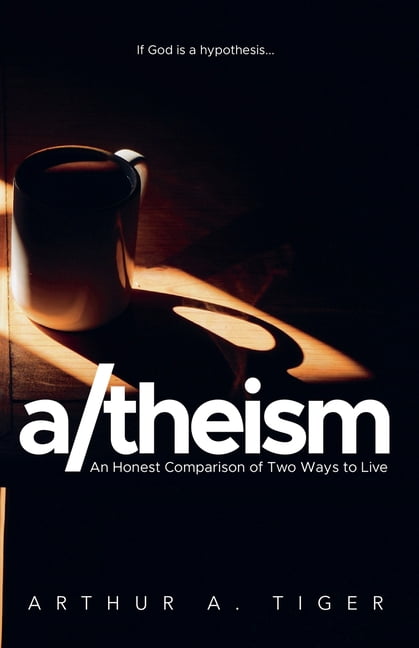
Apology A/theism: An Honest Comparison of Two Ways to Live, (Paperback)
Product details
| Management number | 240401080 | Release Date | 2026/07/16 | List Price | US$4.80 | Model Number | 240401080 | ||
|---|---|---|---|---|---|---|---|---|---|
| Category | |||||||||
<p>A friend once told me: "I think believing in God would make my life better. I just can't make myself believe something I think is false." </p><p>This book is for people like him. </p><p>Not for people who've already made up their minds. Not for the confidently religious or the confidently irreligious. For the ones in between - skeptics who are honest enough to wonder, believers who are honest enough to doubt, and everyone who's tired of being talked down to by both sides. </p><p>Here is what this book does. It takes two ways of living - one that says there is no God, and one that says there is - and compares them. Not as abstract philosophies, but as practical approaches to the problems every human being faces: finding meaning when life falls apart, knowing right from wrong when the stakes are real, building relationships that last, and facing suffering without looking away. </p><p>The starting point is deliberately secular. No sermons. No Bible verses thrown like grenades. The question isn't "which worldview is true?" - it's "which one actually works when you need it?" </p><p>The book begins on the skeptic's territory. It takes atheism seriously - its intellectual courage, its honest reckoning with a brutal world, its freedom from religious guilt. It presents the strongest arguments against faith without flinching. Then it asks a simple question: what happens when life gets hard? </p><p>Drawing on research from Harvard, Duke, and other major institutions, the book examines what the data actually says about meaning, mental health, community, and resilience - and where faith makes a measurable difference. Not miracle stories. Numbers. </p><p>But this is not a self-help book with a religious coat of paint. Somewhere past the data and the arguments, the book makes a turn. The reader discovers that the grace and unearned acceptance described in earlier chapters didn't come from a philosophy. They came from a person - and a specific event in history. </p><p>The final section presents the Christian message directly: who Jesus claimed to be, what happened on the cross, and what it means to respond. Not with pressure, but with the same honesty that guided every page before it. </p><p>a/theism is written for the reader the author used to be: skeptical, thoughtful, and tired of easy answers from both sides. </p><p><em><strong>No caricatures. No pressure. No promises of an easy life. Just an honest comparison, a careful calculation, and an open door.</strong></em></p>
- Apology A/theism: An Honest Comparison of Two Ways to Live, (Paperback)
- Author: Arthur A. Tiger
- ISBN: 9786166309133
- Format: Paperback
- Publication Date: 2026-02-11
- Page Count: 174
| Book format | Paperback |
|---|---|
| Fiction/nonfiction | Non-Fiction |
| Genre | Religion |
| Publication date | February, 2026 |
| Pages | 174 |
| Subgenre | Christian Theology |
| Series title | Apology |
| Number in series | 0 |
| Edition | 1 |
| Publisher | Arthur A. Tiger |
| Original languages | English |
| Language | English |
| Is collectible | N |
| Recording time | 0 min |
| Retail packaging | Single Piece |
| Assembled product dimensions (l x w x h) | 5.50 x 0.37 x 8.50 in |
| Assembled product weight | 0.46 lb |
| Bisac subject heading | Religion |
Bestseller ranking
Agnosticism Books



Customers who viewed this product also viewed
Party Size Chips



Correction of product information
If you notice any omissions or errors in the product information on this page, please use the correction request form below.
Correction Request Form